
What Happens if You Don’t Pay a Train Ticket in London



What Happens if You Don’t Pay a Train Ticket in London
A routine ticket inspection on the London Underground can quickly become serious if your Oyster card has not been tapped in or if you cannot show a valid ticket. If you are wondering what happens if you don’t pay a train ticket in London, TfL may issue a Penalty Fare Notice starting at £82 or investigate the incident as fare evasion under its byelaws. You will be given a deadline to pay or appeal, and ignoring the notice can lead to debt recovery action or prosecution in the magistrates’ court. In more serious cases, this can result in higher fines and a criminal record. This guide explains each stage of the process, from inspection and penalty issue to escalation and court outcomes.
Immediate Consequences on the Train

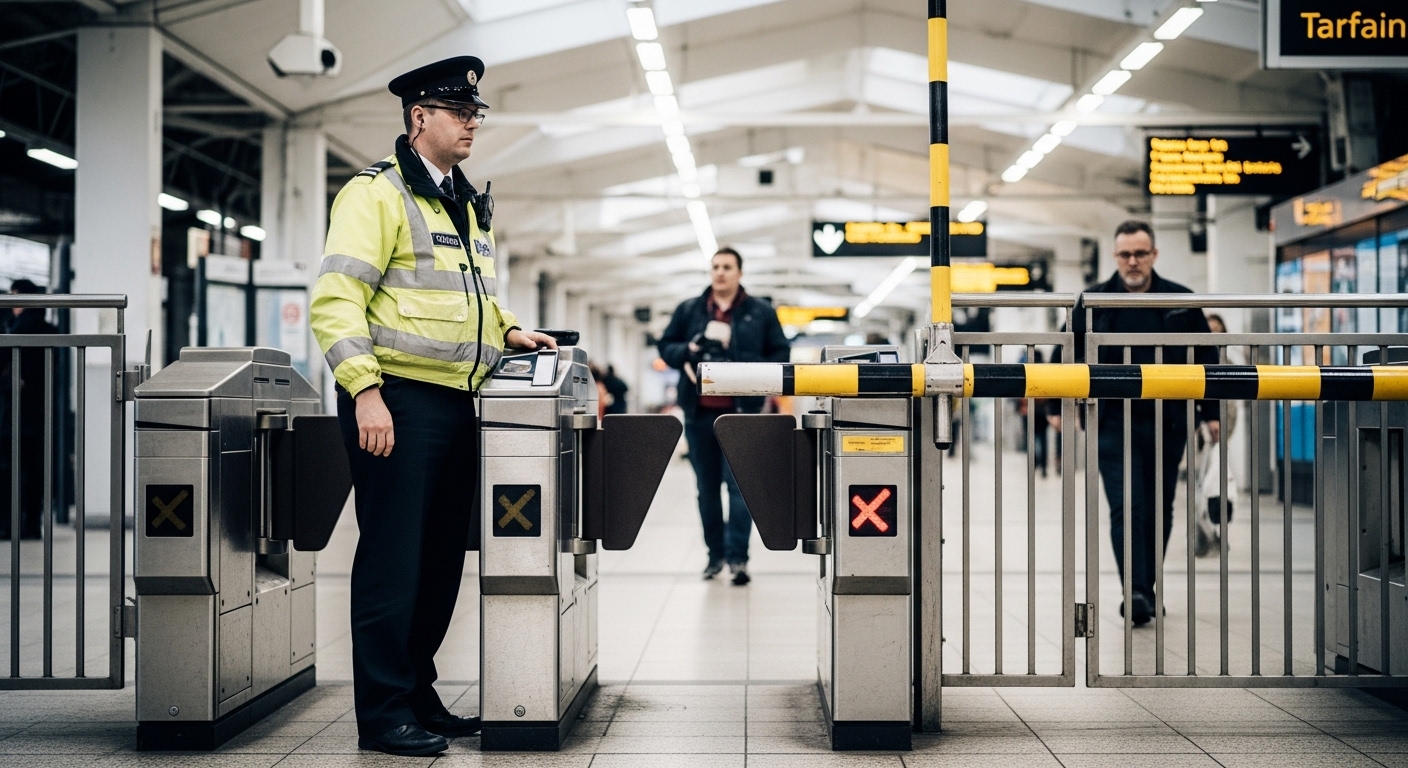
When caught without a valid ticket on TfL services or National Rail in London, passengers face immediate intervention by ticket inspectors or revenue protection officers, leading to on-the-spot penalty issuance. This applies across the Underground, Overground, Elizabeth line, and DLR networks. Inspectors follow Transport for London Penalty Fares Rules 2005 and National Rail Conditions of Travel.
Enforcement teams collect CCTV evidence from stations and trains, often backed by bodycam footage. This records the entire encounter for verification. Passengers must provide ID and journey details right away.
Refusal to cooperate can escalate to staff intervention or police involvement for fare evasion. Common on busy routes like the Northern Line during peak hours. Always carry proof like Oyster card history or contactless statements.
Ticketless travel triggers a swift process to issue a Penalty Fare Notice (PFN). Pay promptly to avoid further issues. Experts recommend checking journey history via the TfL app before travel.
Ticket Inspector Encounter
Ticket inspectors on London Underground, Overground, Elizabeth Line, and DLR services use handheld scanners and CCTV verification to confirm ticketless travel within 60 seconds of confrontation. They request your ID and journey details first. This starts the standard four-step process.
- ID request and journey details: Confirm your route, entry station, and touch-in time.
- Ticket validation check: Scan Oyster, contactless payment history, or Freedom Pass at gateline.
- Explanation opportunity: Show proof of purchase, like a transaction ID or a receipt photo.
- PFN issuance: If evasion is confirmed, receive the £80 penalty on the spot.
A commuter on the Northern Line was fined £80 after failing to show a transaction ID from a ticket machine. Inspectors cross-check with station CCTV. Stay calm and provide details to avoid escalation.
Random inspections occur at barriers, onboard, or platforms. Revenue protection teams target peak hours and interchanges. TfL enforcement follows strict protocols for fairness.
Penalty Fare Notice (PFN)
The Penalty Fare Notice (PFN) is issued immediately using TfL’s digital handheld devices, requiring your signature on a ‘Statement of Truth‘ acknowledging the £80 penalty. This legal basis comes from the Railways (Penalty Fares) Regulations 2018. Digital PFNs connect with the TfL app for instant email delivery.
Key components include:
- Notice number for tracking appeals.
- Incident date, time, and location from bodycam and CCTV.
- The inspector details and the payment QR code.
- Appeal instructions within 21 days.
| PFN Section | Description |
|---|---|
| Header | Penalty Fare Notice, £80 amount |
| Details | Journey info, evasion reason |
| Payment | QR code, 14-day early pay option |
| Appeal | 21-day deadline, contact details |
Sign under penalty of law; refusal leads to SJPN or prosecution. Pay via app, online portal, or station. Appeal with proof like a bank statement for a declined contactless payment.
Penalty Fare Amount and Payment
London penalty fares start at £80 (reduced to £50 if paid within 14 days), doubling to £160 for non-payment, enforced consistently across TfL and National Rail networks. Zonal pricing does not affect penalty fares, unlike standard tickets. Daily caps on pay-as-you-go fares do not apply to these fines.
Operators like South Western Railway set a maximum £100 penalty under the Railway (Penalty Fares) Regulations 2018. Check the official TfL penalty fare table for specifics. National Rail standard terms outline variations by franchise operator.
For a ticketless passenger caught at a gate or during a ticket check, staff issue a Penalty Fare Notice (PFN). This covers Underground, Overground, Elizabeth line, and DLR fare evasion. Always carry proof of purchase to avoid an inspector’s fine.
Payment avoids escalation to a Single Justice Procedure Notice (SJPN) or court summons. Unpaid tickets lead to prosecution risks, including a criminal record. Early payment shows compliance and reduces the fine amount.
Standard Penalty Fare (£80 or £50)
TfL’s standard Penalty Fare is £80, reducible to £50 if paid within 14 days; National Rail operators charge £100 maximum per Railway (Penalty Fares) Regulations 2018. This applies regardless of zonal pricing or boundary crossing. Incomplete journeys or missing tickets trigger the same fine.
| Operator | Standard PF | Early Payment | Doubled Amount |
|---|---|---|---|
| TfL Underground | £80 | £50 | £160 |
| Elizabeth Line | £80 | £50 | £160 |
| South Western Railway | £100 | £60 | £200 |
Note that zonal fare irrelevance means short trips or peak hours do not lower the fine amount. A commuter fine or tourist penalty follows the table. Enforcement officers use CCTV evidence or bodycam footage for validation.
For repeat offenders, prior convictions may lead to higher scrutiny. First offences often receive standard terms. Contact station staff or a ticket machine for Oyster card or contactless payment issues to prevent ticketless travel.
Payment Deadlines and Methods
Pay within 14 days for 37.5% discount using the PFN QR code scanning via TfL Oyster app, website, or phone (0343 222 1234). Deadlines include 21 days for appeals and 28 days for full payment. Use your postcode to find operator-specific portals.
- TfL app for instant payment, linking to journey history and transaction ID.
- tfl.gov.uk/pay-penalty with PFN reference for online settlement.
- Phone payment using a card only on the helpline.
- Bank transfer with the provided sort code and reference.
Missed deadlines trigger doubled fines or debt recovery. Provide photo evidence or receipt proof during payment. Extenuating circumstances, like low balance alerts, may support a refund claim.
Avoid escalation to bailiffs or civil debt by prompt action. Appeal within 21 days if you have a witness statement or valid ticket proof. The station manager’s discretion applies in some cases for goodwill gestures.
Failing to Pay the Penalty Fare
Unpaid penalty fares escalate automatically after 21 days, transferring to debt recovery agencies with added fees, per TfL’s standard enforcement policy. This process starts with a final reminder letter. Ignoring it leads to further action by external collectors.
Transport for London hands off cases first to the National Service for Asylum and Refugees, then to agencies like Collect. Revenue protection reports highlight how non-payment often results in prosecution. Commuters face mounting pressure to settle quickly.
For example, a £80 penalty fare notice from a ticketless journey on the Elizabeth line can balloon with fees. Contact TfL customer service within the window to discuss options. Fare evasion risks turning a simple fine into a legal battle.
Practical steps include checking your Oyster card history or journey details via the TfL app. Early payment avoids escalation to a court summons. Repeat offenders may receive a single justice procedure notice, leading to the magistrates’ court.
Escalation to Debt Recovery
After 28 days, unpaid PFNs transfer to National Service for Asylum and Refugees (NSAR) or operator-contracted agencies like Debt Collection Partners. This marks the shift from TfL direct enforcement to professional debt recovery. Expect insistent letters and calls demanding payment.
Here’s the typical timeline:
| Day | Action |
|---|---|
| 21 | Final reminder |
| 28 | Agency transfer (£40 fee) |
| 60 | Court claim (CCJ risk) |
| 90+ | Bailiff enforcement |
A real example shows an £80 PFN growing to £245 after six months, including court costs. County Court Judgment records often list transport debts. Act before day 21 by contacting the helpline or online portal.
If facing hardship, provide a witness statement or proof of extenuating circumstances. Agencies may offer payment plans. Delaying risks credit rating damage from a CCJ.
Additional Fees and Interest
Debt recovery adds a £40 administration fee immediately, plus 8% statutory interest under the Consumer Credit Act 1974 and court costs up to £120. These pile up quickly for unpaid train ticket fines in London. Total costs can double the original amount.
Key fee breakdown:
| Fee Type | Amount | When Added |
|---|---|---|
| Admin Fee | £40 | Debt transfer |
| Statutory Interest | 8% pa | Monthly |
| Court Issue Fee | £53-£118 | CCJ claim |
| Bailiff Fee | £80+ | Enforcement |
An £80 penalty might reach £285 in nine months through this process. Bailiffs can seize goods or attach earnings. Check for early payment discounts within 14 days to halt interest.
To mitigate, gather proof of purchase, like receipts or transaction IDs. Appeal via the formal process if you had a valid ticket. Seek legal advice from a duty solicitor for court threats.
Legal Prosecution Process

Persistent non-payment triggers criminal prosecution under the Railways Act 1980 Section 5(3), processed via Single Justice Procedure Notice with court fines up to £1,000. This applies after multiple unpaid penalty fares from Transport for London or rail operators. Failure to address these escalates from civil debt to criminal charges.
The CPS charging standards focus on cases with two or more unpaid PFNs, treating repeated fare evasion as a criminal matter. Prosecutors consider public interest and evidence like CCTV footage from gateways or ticket checks. A ticket inspector‘s statement often supports the case.
In the Magistrates’ Court, judges follow the Sentencing Council guidelines for sentencing. Outcomes range from fines to community orders for repeat offenders. In 2023, around 12,500 rail prosecutions occurred with a 92% conviction rate, showing high enforcement success.
Passengers face a criminal record upon conviction, impacting jobs or travel insurance. Early payment of fixed penalty notices avoids this process. Seek legal advice if summoned to explore mitigation options.
Single Justice Procedure Notice
SJPN arrives 6-8 weeks post-debt escalation, requiring a guilty/not guilty response within 12 days via post or online portal. This single justice procedure notice handles most minor fare evasion cases efficiently. Ignoring it leads to default conviction and higher penalties.
Response options include:
- Guilty plea with payment of fine plus costs, often around £200 total.
- Not guilty plea, triggering a full court hearing.
- Submit a mitigation statement explaining circumstances like insufficient funds or extenuating circumstances.
Around 85% of cases resolve via single justice disposal per CPS rail guidelines.
A sample mitigation letter might state: “I admit the offence, but faced job loss, affecting my Oyster card top-up. I have now paid the debt and request leniency.” Include proof like bank statements. This can reduce fines or lead to conditional discharge.
Contact TfL customer service or a duty solicitor for help. CPS guidelines emphasise proportionality, so genuine hardship matters. Respond promptly to avoid prosecution costs escalation.
Court Fines and Penalties
Magistrates’ Court fines average £250 plus £85 victim surcharge and £600 costs for fare evasion under Sentencing Council 2021 guidelines. Fines use Band A or B calculation based on weekly income. Low earners get reduced amounts to ensure fairness.
Sentencing varies by history:
| Offence Type | Fine Range | Additional Penalty |
|---|---|---|
| First offence | £150-£300 | Conditional discharge |
| Repeat offender | £500+ | Community order (100 hours) |
Courts consider prior convictions or daily cap evasion patterns.
In one case, a commuter faced £720 total for three unpaid PFNs from Elizabeth line travel without a valid ticket. The judge added a compensation order for revenue loss. Prosecution costs often double the base fine.
Other penalties include a criminal record, a potential Oyster block, or debt recovery via bailiffs. A guilty plea early may lower totals. Consult a disclosure barrister for employment impact advice.
Long-Term Impacts
Conviction creates a disclosable criminal record affecting employment, plus potential Oyster card blocks and credit rating damage from CCJs. Under the Rehabilitation of Offenders Act 1974, fines for fare evasion stay on record for six months. This can limit job prospects in sensitive roles.
Transport for London (TfL) may blacklist repeat offenders, blocking contactless payments or Oyster cards at gatelines. Unpaid fines escalate to civil debts, leading to bailiff action. Disclosure and Barring Service (DBS) checks reveal convictions, impacting vetting for public-facing jobs.
Employment vetting often flags unlawful fare evasion as dishonesty. Professional licenses in finance or security become harder to obtain. Credit issues from County Court Judgments (CCJs) raise mortgage rates or block approvals.
To mitigate, pay fines promptly and seek legal advice for first offences. Keep proof of payment for appeals. Avoid repeat ticketless travel to prevent permanent rail bans.
Criminal Record Effects
Rail fare evasion convictions appear on basic DBS checks for 12 months and standard or enhanced checks indefinitely if repeat offences. This marks you with a criminal record for unpaid tickets or penalty fares. Job applications in education or childcare suffer the most.
Employers reject candidates with recent convictions during vetting processes. For example, a teacher lost supply work after disclosing a fare evasion conviction on an enhanced DBS check. Professional licenses for solicitors or doctors require clean records.
- Mortgage applications flag CCJs from unpaid fines, delaying home buys.
- Travel insurance may exclude cover for those with evasion convictions.
- Standard DBS checks reveal fines for one year post-conviction.
Seek mitigation at the magistrates’ court with proof of the circumstances. Use duty solicitors for guilty pleas. Research suggests that disclosing early builds trust with employers.
Bans from Rail Travel

TfL can suspend Oyster cards or contactless accounts for 6-12 months, and National Rail operators blacklist repeat offenders via shared databases. Three or more unpaid Penalty Fare Notices (PFNs) trigger alerts. Facial recognition and CCTV match ticketless passengers at barriers.
Account suspension blocks Gateline access across the London rail network, including the Underground, Overground, and Elizabeth line. Repeat offenders face permanent restrictions. Station staff enforce via bodycam footage and statements.
- Pay fines within 21 days to avoid escalation.
- Appeal via the station manager with journey history or receipt proof.
- Provide bank details for compliance checks post-ban.
National Rail franchises like Southeastern share blacklists for enforcement. Contact TfL customer service for Oyster blocks. Comply with payment plans to lift bans faster.
Notice: Informational Content Disclaimer
The content provided on this website, including articles, blog posts, and other informational materials, is intended for general informational purposes only. It is not intended as, and should not be considered, legal advice.
Visitors to this website should be aware that the information presented here is not a substitute for seeking legal advice from a qualified solicitor or legal professional. Each individual's legal situation is unique, and the information provided may not be applicable to specific circumstances.
If you require legal advice or have specific legal questions, we encourage you to contact us directly. Our experienced team of solicitors is here to assist you with your legal needs and provide tailored advice to address your concerns.
Please be advised that any communication through this website, including the use of contact forms or email, does not create a solicitor-client relationship. Confidential or time-sensitive information should not be sent through this website. To establish a solicitor-client relationship and discuss your legal matters in detail, please contact us for a consultation.
We strive to provide accurate and up-to-date information, but we make no representations or warranties regarding the accuracy, completeness, or suitability of the information contained on this website. We shall not be liable for any reliance placed on the information provided herein.
Thank you for visiting our website. We look forward to the opportunity to assist you with your legal needs.